Black horizontal rounded line on a white background

Boiler Installation

Condensing boilers reach their rated efficiency only when water returning from the radiators drops below roughly 130°F, cool enough for flue gases to condense and release extra heat. Maverick Ambitions HVAC handles boiler installation in Newark, NJ with that detail in mind, designing piping, outdoor reset controls, and venting for condensing, combi, and conventional hot-water boilers, as well as steam boilers for one-pipe and two-pipe systems. Each boiler is sized from heat loss or radiator capacity, then commissioned with combustion testing.
Technician repairing an outdoor air conditioner unit with tools and hoses
Technician repairing a white air conditioner unit with tools on a tiled floor

THE BOILER IS ONLY HALF THE INSTALLATION.

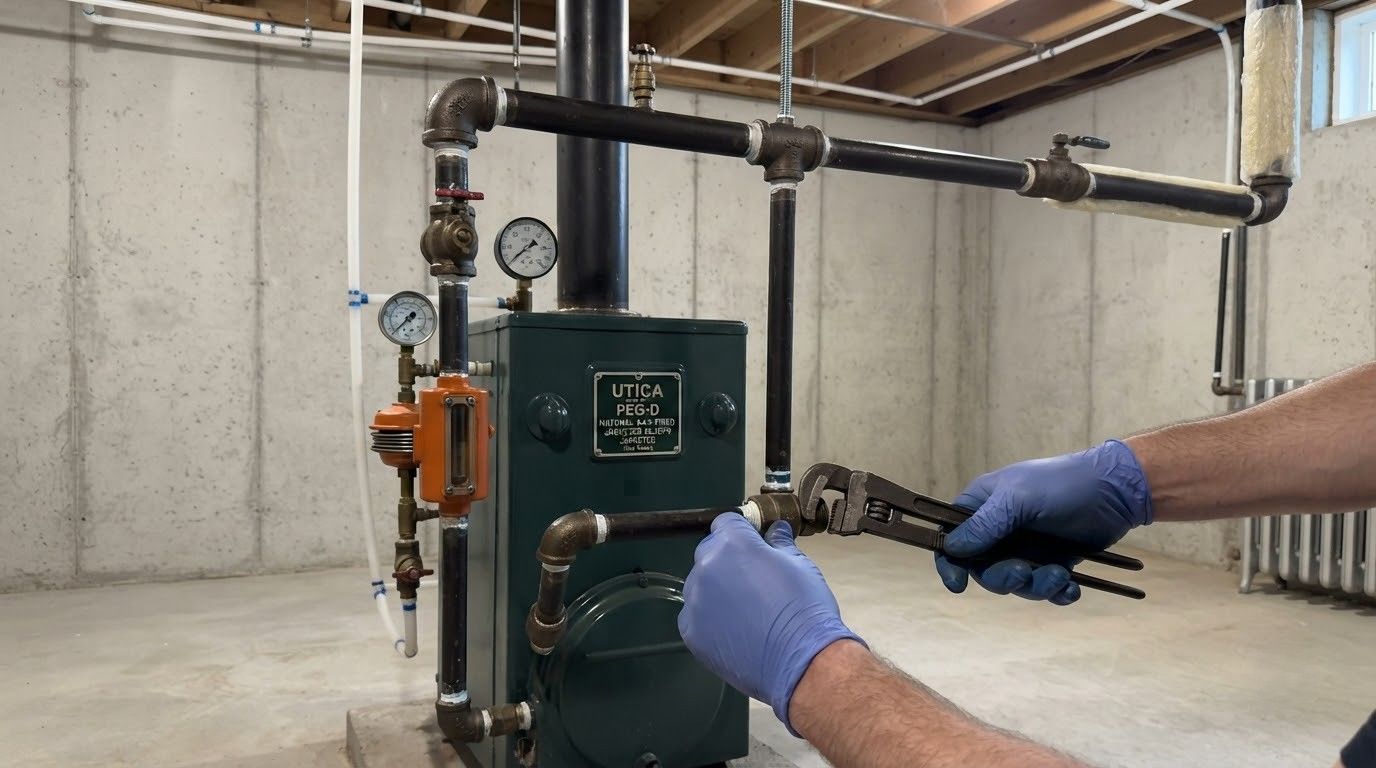
A high-efficiency boiler connected with poor piping can short cycle, run hot return water, and never condense, wasting the efficiency you paid for. Near-boiler piping, circulator sizing, air elimination, expansion control, and venting decide how well the new unit performs. Those details live in the space around the boiler, and they matter as much as the brand name printed on the cabinet. We design the full boiler room, from primary-secondary piping and zone valves to condensate neutralizers and sidewall venting, so the equipment performs the way its rating promises every single winter.
Black horizontal line on a white background.
BOILER INSTALLATION

QUIET, EVEN RADIATOR HEAT IN EVERY ROOM OF THE HOUSE.

Hydronic heat has a comfort that forced air struggles to match: no blowing drafts, no dust stirred up, just steady warmth from radiators, baseboards, or floors. A well-installed boiler keeps that warmth even from the first floor to the attic bedrooms, adjusts its output to the weather, and runs quietly in the basement. Add an indirect water heater, and the same boiler can supply plenty of hot water for every shower too.
OLD STEAM MAINS AND CAST-IRON RADIATORS DESERVE RESPECT.
Many homes in Newark, NJ still carry original steam mains and cast-iron radiators that have heated families for generations. Those systems can keep working well, but a new boiler must match their volume, pipe pitch, and near-boiler piping requirements exactly. We inspect mains, vents, and radiators before choosing equipment, and we tell you honestly whether keeping steam or converting to hot water makes more sense for your home.
PIPING IS WHERE A BOILER JOB IS WON OR LOST.
Manufacturers publish near-boiler piping diagrams for a reason, yet shortcuts in the boiler room remain one of the most common causes of noisy, inefficient systems. In 24 years of heating work, our licensed lead has replumbed plenty of boilers installed with undersized headers or missing air separators. Every installation we complete follows the manufacturer’s diagram, uses proper supports and isolation valves, and is pressure tested before the first heating cycle ever runs.
WHAT A PROPERLY INSTALLED BOILER DELIVERS.
Black gear with weather icons: flame, heat waves, snowflake, and water drops around it
Lower Fuel Bills
Modern condensing boilers paired with outdoor reset control burn noticeably less gas than older cast-iron units, especially during the many mild fall and spring days when full output is never needed.
Black temperature-control icon with gear, heat waves, flame, snowflake, and water drop
Even, Draft-Free Warmth
Radiant heat from radiators and baseboards warms people and surfaces directly, avoiding the hot and cold swings, blowing air, and stirred-up dust common with forced-air furnaces in older homes.
Black weather icon with gear, flame, snowflake, water drop, and heat waves
Quiet Operation
Correct piping, air elimination, and properly sized circulators prevent the gurgling, banging, and whistling that make some hydronic systems noisy, so the only thing you notice is steady warmth.
Black climate control icon with gear, snowflake, flame, droplet, and heat waves
Plenty of Hot Water
Pairing the boiler with an indirect water heater, or choosing a combi unit, delivers ample domestic hot water without a separate burner, flue, or tank fighting for space in the basement.
Black gear icon surrounded by fire, heat waves, snowflake, and water drops
Space Saved
Compact wall-hung boilers replace bulky floor units and old oil tanks, freeing basement and utility room space for storage, laundry, or the finishing projects you have been putting off for years.
Black weather control icon with gear, flames, snowflake, water drop, and heat waves
Long Service Life
A boiler installed with clean water, proper air removal, and correct venting avoids the corrosion and stress that shorten equipment life, so the system keeps heating reliably for many winters to come.
Black horizontal rounded bar on a white background

our services

OUR BOILER INSTALLATION WORK.

Every heating system has its own layout, fuel source, and radiation, so boiler installations vary widely from one property to the next. These are the hydronic and steam projects homeowners and building owners request most often.
Hands adjusting a white ceiling fixture with a screwdriver against a concrete ceiling
CONDENSING UNITS
High-Efficiency Condensing Boiler Installation

Wall-hung and floor-standing condensing boilers are installed with PVC or polypropylene venting, condensate neutralizers, and outdoor reset controls, piped so return water stays cool enough to condense whenever the weather allows.
Technician kneeling by outdoor HVAC unit, checking controls beside a house
COMBI BOILERS
Combi Boiler Installation

Combination boilers deliver space heating and on-demand domestic hot water from one compact cabinet. We size them for both loads and confirm that gas supply, water pressure, and venting meet manufacturer requirements.
Technician installing a wall-mounted air conditioner above a window
STEAM SYSTEMS
Steam Boiler Installation

New steam boilers are matched to the connected radiation, piped with the proper header and equalizer, and fitted with low-water cutoffs, pressure controls, and main vents so steam reaches every radiator evenly.
Worker installing ductwork in a ceiling, wearing a hooded jacket and using tools near exposed pipes
HOT-WATER HEAT
Hot-Water Boiler and Baseboard Systems

Cast-iron and modern hot-water boilers are installed with circulators, zone valves, air separators, and expansion tanks, delivering balanced, quiet heat to cast-iron radiators, fin-tube baseboard, or modern panel radiators throughout the home.
Hand using a drill to install an electrical box on a wall, with a level above it
INDIRECT TANKS
Indirect Water Heater Installation

An indirect tank uses boiler heat to warm domestic water through an internal coil. We pipe it as a priority zone, so showers stay hot without adding a separate burner, flue, or gas connection.
HVAC technician replacing a furnace filter in a home utility room
ZONING
Zoning and Controls

Zone valves or individual circulators let bedrooms, living areas, and additions hold different temperatures. Outdoor reset and smart thermostats then fine-tune boiler output based on the weather and how each room is used.
Short black horizontal line on a white background

Real Reviews · Real Customers

WHAT OUR CLIENTS SAY.

Homeowners and landlords who installed new boilers with us describe tidy boiler rooms, clear explanations of piping and controls, and radiators that heated evenly from the very first cold morning. Many mention appreciating straight answers about steam, hot water, and fuel choices.
Short black horizontal line on a white background
FAQ

FREQUENTLY ASKED QUESTIONS.

Choosing a boiler involves more decisions than most homeowners expect. These answers cover boiler types, efficiency, steam conversions, hot water, venting, controls, radiant floors, and mounting options for new equipment.

    What is the difference between a combi boiler and a heat-only boiler?

    A combi boiler heats both the home and domestic water on demand from one unit. A heat-only boiler handles space heating alone, with hot water supplied by a separate indirect tank or standalone water heater.


    Should I choose a condensing or non-condensing boiler?

    Condensing boilers capture extra heat from flue gases and work best with lower water temperatures, such as large radiators or radiant floors. Non-condensing models suit systems that need consistently high water temperatures all season.


    Can a steam heating system be converted to hot water?

    Often, yes, though one-pipe steam radiators and mains may need replacement or careful repiping. Maverick Ambitions HVAC evaluates steam conversions for older homes in Newark, NJ, comparing comfort, efficiency, and disruption honestly.


    Can a new boiler provide my household’s hot water too?

    Yes. An indirect water heater connected as a boiler zone stores water heated by the boiler, often recovering faster than a standalone tank. Combi boilers take a different approach and heat water on demand instead.


    What venting does a high-efficiency boiler need?

    Condensing boilers vent through sealed PVC, CPVC, or polypropylene pipe, usually out a sidewall or roof. Maverick Ambitions HVAC also addresses water heaters left orphaned on old chimneys in Newark, NJ homes during installation.


    What is outdoor reset control?

    Outdoor reset adjusts boiler water temperature automatically based on the outdoor temperature. Milder days get cooler water, which improves comfort, reduces cycling, and keeps condensing boilers operating in their most efficient range.


    Can a boiler heat radiant floors?

    Yes. Radiant floors run on low water temperatures, usually through a mixing valve or a dedicated zone, which pairs especially well with condensing boilers. Floor coverings and tubing layout affect how much heat reaches the room.


    Where can a wall-hung boiler be mounted?

    Wall-hung boilers mount on basement, utility room, or closet walls that can carry their weight and allow venting within the manufacturer’s length limits. Required service clearances must stay open for future maintenance.


    Black horizontal line on a white background
    HOW WE WORK

    FROM HEAT LOSS TO FIRST FIRE, HERE IS HOW.

    Step-01

    WE SURVEY THE SYSTEM
    We inspect the existing boiler, piping, radiators, venting, and gas or oil supply, and note any leaks, air problems, or cold rooms. Those findings guide equipment choice and highlight work that should happen during installation.

    Step-02

    WE SIZE BY HEAT LOSS
    For hot-water systems, we calculate the home’s heat loss, and for steam, we measure the connected radiation. Either way, the new boiler is sized to the building rather than copied from the nameplate of the old one.

    Step-03

    WE DESIGN THE BOILER ROOM
    Piping layout, circulators, zone controls, venting route, and condensate drainage are planned before work starts. You receive a free estimate explaining the equipment, the scope, and every alternative option we considered for your system and budget.

    Step-04

    WE REMOVE AND PREPARE
    The old boiler is drained, disconnected, and carried out with floors protected. We clean the area, flush or treat system water when needed, and prepare supports, gas lines, and venting paths for the new unit.

    Step-05

    WE INSTALL AND PIPE
    The boiler is mounted or set level, near-boiler piping is assembled to the manufacturer’s diagram, and safety devices are installed. The system is then filled, purged of air, and pressure tested before the burner ever fires.

    Step-06

    WE COMMISSION AND TEACH
    We fire the boiler, measure combustion, verify venting and safety controls, and set the outdoor reset curve. Then we show you the thermostat, pressure gauge, and shutoffs, and explain a few simple seasonal checks.