Black horizontal rounded line on a white background

Emergency Refrigeration Repair

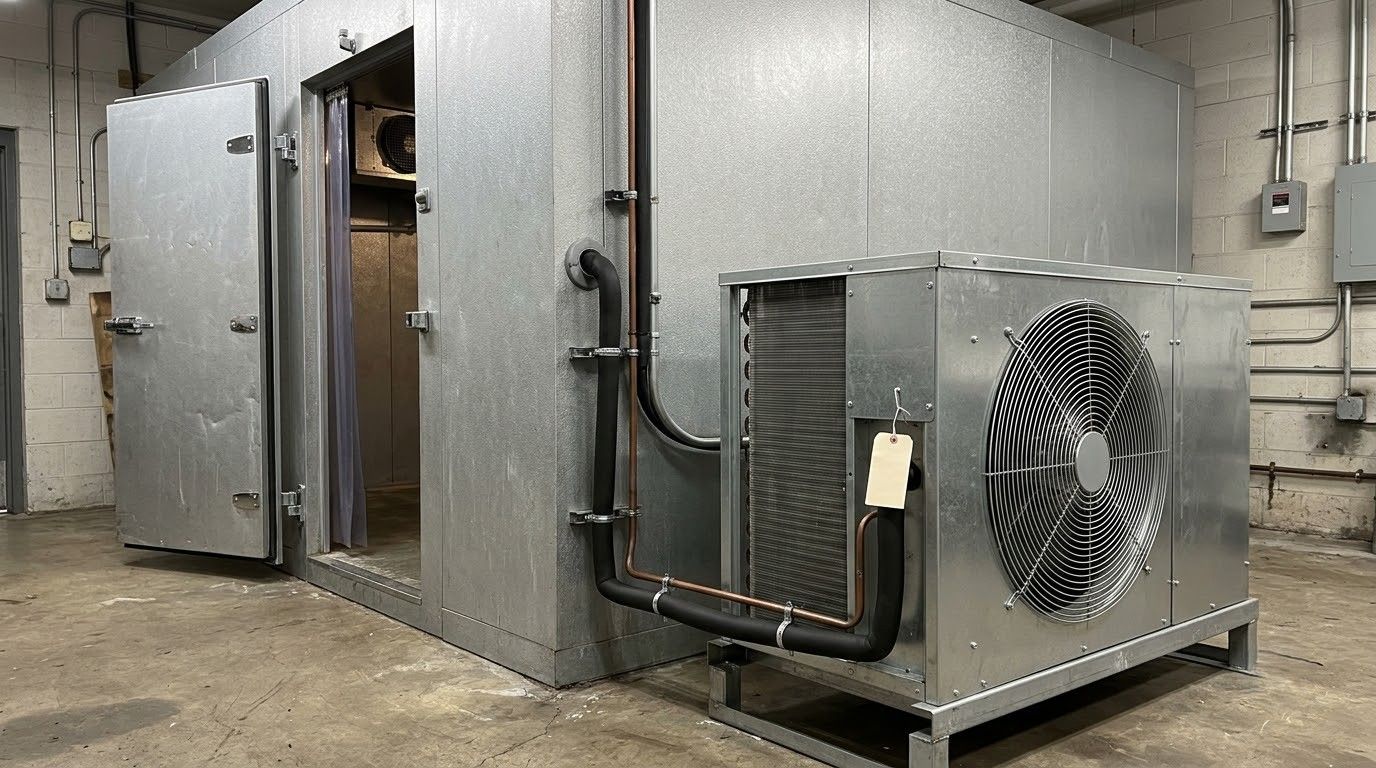
Perishable food that sits above 40°F for 4 hours or more should be thrown away, according to FDA guidance, which means a walk-in or reach-in failure starts a countdown on everything inside. Maverick Ambitions HVAC offers emergency refrigeration repair in Newark, NJ at any hour, answering calls about failed walk-ins, warm reach-ins, freezers losing temperature, iced-over coils, and dead ice machines at restaurants, markets, and other food businesses, working fast to restore safe holding temperatures before valuable product is lost for good.
Technician repairing an outdoor air conditioner unit with tools and hoses
Technician repairing a white air conditioner unit with tools on a tiled floor

CLOCKS START TICKING THE MOMENT A COMPRESSOR STOPS.

A refrigeration failure does not wait for business hours. A compressor can trip on a Saturday night, a fan motor can seize after closing, and a freezer can drift warm while everyone is asleep. Every hour the box warms, more product moves toward the discard pile, and the losses grow from a few items to an entire walk-in full of inventory. Our team answers refrigeration emergencies around the clock, helps you protect product while we travel, and focuses on restoring safe temperatures fast, then completing a lasting repair that holds up through busy weeks.
Black horizontal line on a white background.
EMERGENCY REFRIGERATION REPAIR

SAVE THE PRODUCT, RESTORE THE TEMPERATURE, AND GET BACK TO BUSINESS.

When a cooler or freezer fails, the priorities are clear: protect what can still be saved, find the failure, and get the equipment holding safe temperatures again. We guide your staff on moving and consolidating product, diagnose the system quickly with gauges and meters, and make the repair with approved parts. Should the fix require an ordered part, we help set up stopgap cooling so the business can keep serving customers in the meantime.
FRIDAY NIGHTS AND HOLIDAY WEEKENDS ARE WHEN COOLERS QUIT.
Refrigeration in restaurants and markets around Newark, NJ works hardest during peak service, summer heat waves, and holiday rushes, which is exactly when weak components tend to fail. Closed businesses face a different risk, since a failure after closing can go unnoticed until morning. We respond around the clock, including nights and weekends, because food businesses cannot schedule their emergencies around normal business hours.
WHEN THE COOLER WARMS, WE MOVE FIRST.
Refrigeration emergencies reward speed and precision in equal measure. Experience across 24 years of refrigeration work has taught our licensed lead to narrow down failures quickly: a compressor overload versus a failed start relay, a seized fan versus a frozen coil, a leak versus a control fault. That experience means less time diagnosing at 1 a.m. and more product still safe when the box comes back down to temperature.
WHAT FAST EMERGENCY REFRIGERATION SERVICE DELIVERS.
Black gear with weather icons: flame, heat waves, snowflake, and water drops around it
Inventory Saved
Restoring temperature quickly keeps more meat, dairy, seafood, and prepared foods within safe limits, reducing the losses that pile up with every hour a cooler or freezer sits warm.
Black temperature-control icon with gear, heat waves, flame, snowflake, and water drop
Food Safety Protected
Fast repairs and clear guidance on product handling help businesses avoid serving food that spent too long above safe temperatures, protecting customers and the reputation of the business.
Black weather icon with gear, flame, snowflake, water drop, and heat waves
Service Continued
Getting refrigeration running again, or setting up temporary measures, lets restaurants and stores keep operating instead of closing early, canceling catering orders, or turning hungry customers away at the door.
Black climate control icon with gear, snowflake, flame, droplet, and heat waves
Clear Documentation
Records of failure times, temperatures, and repairs support conversations with health inspectors and insurance providers whenever product losses or temperature excursions need to be explained later in writing.
Black gear icon surrounded by fire, heat waves, snowflake, and water drops
Calm Under Pressure
A clear plan for moving product, monitoring temperatures, and completing repairs replaces panic during a stressful night, so managers can stay focused on their staff, their customers, and the rest of the shift.
Black weather control icon with gear, flames, snowflake, water drop, and heat waves
Lasting Fixes
Once temperatures recover, the failed component is replaced properly with approved parts, so the same breakdown does not strike again during the next busy weekend or summer heat wave.
Black horizontal rounded bar on a white background

our services

OUR EMERGENCY REFRIGERATION WORK.
A noisy fan can wait for a scheduled visit, while a warm walk-in full of product cannot. These are the urgent refrigeration calls restaurants, grocers, and food businesses make to us most often throughout the year.
Hands adjusting a white ceiling fixture with a screwdriver against a concrete ceiling
WARM WALK-INS
Walk-In Cooler and Freezer Failures

Walk-ins losing temperature get immediate diagnosis of compressors, condenser fans, evaporator fans, defrost systems, and controls, with the goal of restoring safe holding temperatures as quickly as site conditions and parts allow.
Technician kneeling by outdoor HVAC unit, checking controls beside a house
REACH-IN FAILURES
Reach-In and Prep Table Failures

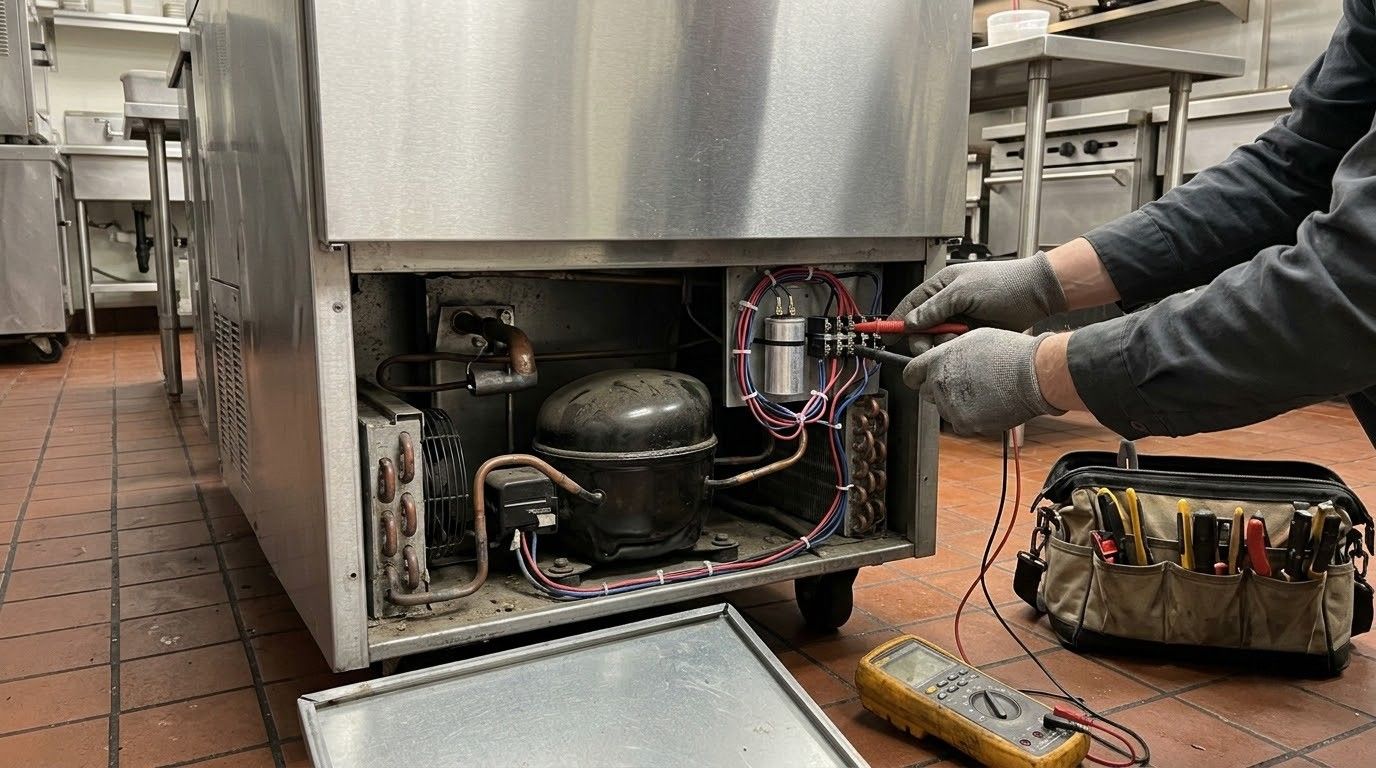
Reach-ins and prep tables running warm during service are tested for failed fans, iced coils, start components, and thermostats, with repairs completed on site whenever the needed parts are available on the truck.
Technician installing a wall-mounted air conditioner above a window
FROZEN COILS
Iced Evaporator Emergencies

Coils encased in ice block airflow and push box temperatures up fast. We safely clear the ice, find the defrost or airflow failure that caused it, and restore normal operation before leaving.
Worker installing ductwork in a ceiling, wearing a hooded jacket and using tools near exposed pipes
COMPRESSOR FAILURES
Compressor and Electrical Failures

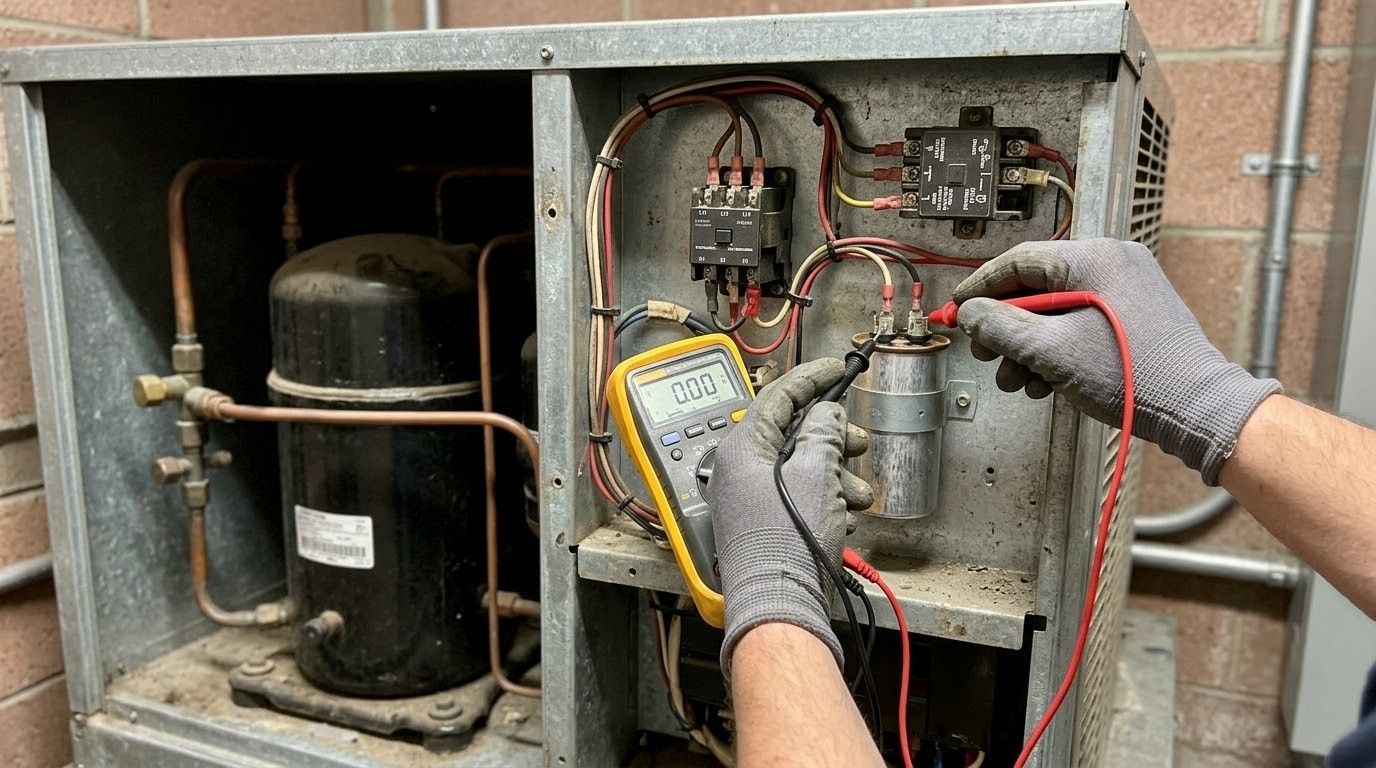
Compressors that will not start, trip overloads, or hum without running get their start relays, capacitors, contactors, and wiring tested, with electrical faults corrected before any restart attempt is made on the unit.
Hand using a drill to install an electrical box on a wall, with a level above it
ICE MACHINES
Ice Machine Breakdowns

When an ice machine stops producing during a busy weekend, we diagnose water, harvest, and refrigeration problems quickly to restore production for bars, restaurants, and convenience stores that depend on ice.
HVAC technician replacing a furnace filter in a home utility room
DISPLAY CASES
Display Case Failures

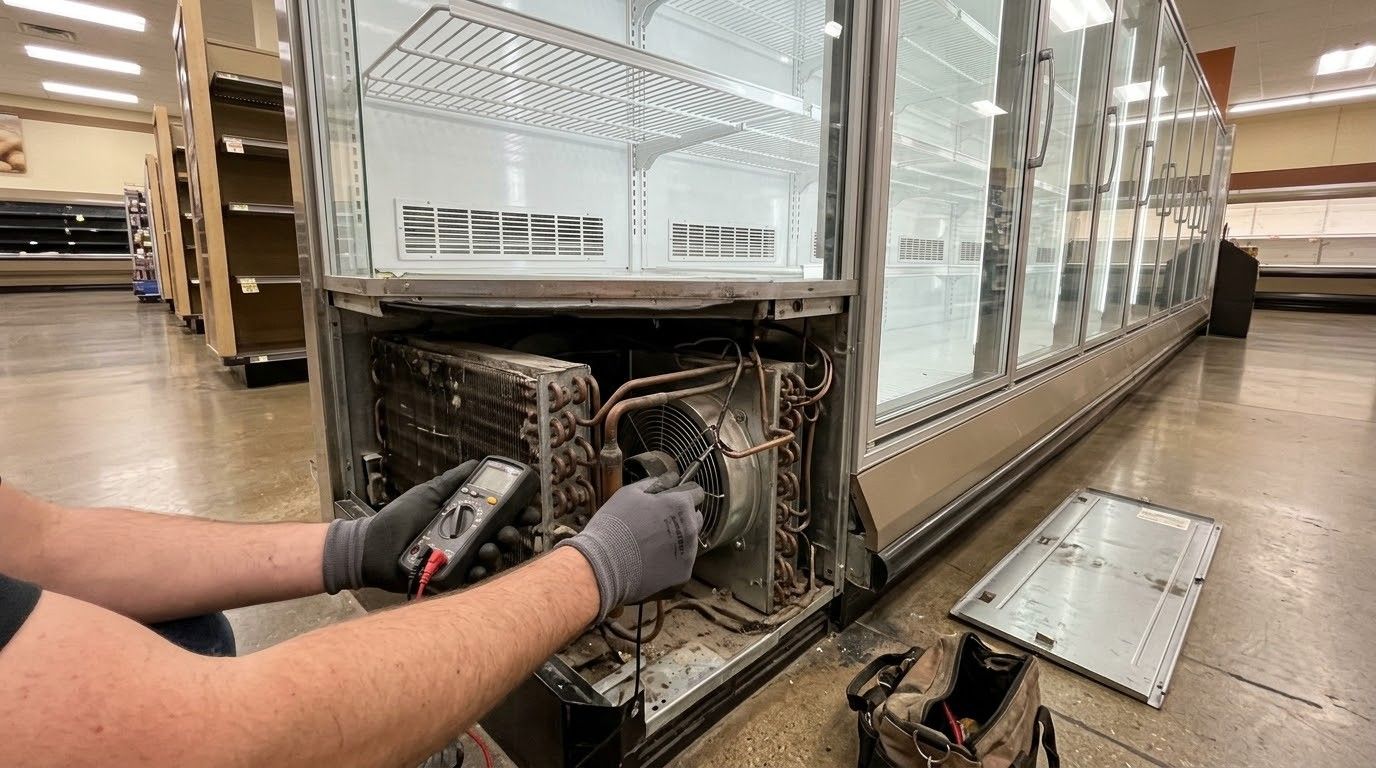
Warm display cases in grocers, delis, and convenience stores threaten both product and sales. We restore cooling, fans, and defrost operation so merchandise stays cold, fresh, and visible to customers again.
Short black horizontal line on a white background

Real Reviews · Real Customers

WHAT OUR CLIENTS SAY.

Restaurant owners and grocers who called us during refrigeration emergencies describe fast responses, calm guidance on protecting product, and repairs that brought their coolers back to temperature. Many say the speed of our arrival is the reason most of their product survived the night.
Short black horizontal line on a white background
FAQ

FREQUENTLY ASKED QUESTIONS.

The first hour of a refrigeration failure decides how much product you save. These answers cover food safety, protecting inventory, warm-up time, breakers, documentation, alarms, calling details, and common causes.

    What should I do with food when my walk-in cooler fails?

    Check product temperatures with a thermometer. FDA guidance says perishable food held above 40°F for 4 hours or more should be discarded, so move items to working units or iced coolers quickly.


    How can I keep product cold until the repair arrives?

    Keep doors closed, consolidate product into working coolers, and use ice or dry ice for freezer items if available. Avoid adding warm deliveries to a failing box, and monitor temperatures with an accurate thermometer.


    How quickly does a walk-in warm up after refrigeration stops?

    It depends on insulation, product load, room temperature, and how often the door opens, and keeping it closed slows warming considerably. Maverick Ambitions HVAC advises businesses in Newark, NJ to check product temperatures every 30 minutes.


    Should I reset a tripped breaker on a failed cooler?

    Reset it once. If the breaker trips again, leave it off, because repeated resets can damage the compressor or wiring. A recurring trip usually signals a shorted component or a failing compressor that needs testing.


    What should we document after a refrigeration failure?

    Record when the failure was noticed, product temperatures, items discarded, and repair details. Those records support health department questions, insurance claims, and your own internal food safety procedures and staff training.


    What should I do if a cooler temperature alarm goes off overnight?

    Check the unit remotely or in person, confirm the reading with a thermometer, and keep doors closed. If temperatures keep rising, call for emergency service and begin moving the most sensitive product first.


    What information helps a technician during an emergency call?

    Share the equipment type, brand and model if visible, current temperature, when the problem started, and any noises, ice, or error codes. Those details help the technician arrive with the right parts and tools.


    What causes most sudden refrigeration failures?

    Common causes include failed fan motors, dirty coils overheating the compressor, defrost failures, failed start components, and refrigerant leaks. Maverick Ambitions HVAC diagnoses each one quickly for food businesses in Newark, NJ.


    Black horizontal line on a white background
    HOW WE WORK

    FROM YOUR CALL TO A COLD BOX AGAIN, HERE IS THE PLAN.

    Step-01

    WE GUIDE YOU BY PHONE
    When you call, we ask about the equipment, current temperatures, and how long it has been warm, then guide your staff on protecting and consolidating product while we head your way with the right tools.

    Step-02

    WE ARRIVE AND ASSESS
    On arrival, we check box and product temperatures, look for obvious failures such as iced coils or stopped fans, and confirm which equipment is most urgent when several units are struggling at the same time.

    Step-03

    WE DIAGNOSE THE FAILURE
    Gauges, thermometers, and meters test compressors, fans, defrost systems, controls, and refrigerant circuits until the failed component is confirmed. Fast diagnosis is precise diagnosis, so we never rely on guesswork, even late at night.

    Step-04

    WE EXPLAIN AND PRICE THE FIX
    Managers learn what broke, how we plan to fix it, and the cost up front. When a component has to be special ordered, we talk through temporary ways to protect product and keep serving customers.

    Step-05

    WE RESTORE COOLING
    We install approved replacement parts, clear any iced coils, and follow EPA rules for all refrigerant work. Once the unit restarts, we stay and watch temperatures drop steadily back toward safe holding levels inside the box.

    Step-06

    WE CONFIRM SAFE TEMPERATURES
    We monitor the equipment until it holds its setpoint, explain what caused the failure, and recommend steps to prevent a repeat, including regular maintenance that keeps coils, fans, and defrost systems healthy all year.