Black horizontal rounded line on a white background

Residential HVAC Repair

Refrigerant is not fuel, and an air conditioner never burns it off, so a system running low almost always has a leak in a coil, line set, or fitting. Maverick Ambitions HVAC provides residential HVAC repair in Newark, NJ, tracing those leaks along with failed capacitors, frozen coils, clogged condensate drains, ignition faults, and blower problems in central air, heat pumps, ductless units, and furnaces. Every diagnosis is measured with gauges and meters, and every repair is explained first.
Technician repairing an outdoor air conditioner unit with tools and hoses
Technician repairing a white air conditioner unit with tools on a tiled floor

A RECHARGE WITHOUT A LEAK REPAIR IS MONEY BLOWN INTO THE AIR.

Plenty of service calls end with a quick refrigerant top-off and a promise that everything is fine. A few weeks later, the house is warm again, because the leak that caused the shortage is still there. The same pattern repeats with reset breakers, bypassed float switches, and replaced fuses. Each shortcut silences a symptom while the underlying fault keeps damaging your equipment. We locate the actual failure, show you the reading or the part, and repair the cause, so you are not paying for the same visit again next month or next season.
Black horizontal line on a white background.
RESIDENTIAL HVAC REPAIR

COOL AIR AND STEADY HEAT RETURN WITHOUT GUESSWORK.

A system that has stopped behaving rarely fails all at once. Airflow weakens, cycles shorten, the outdoor fan hesitates, or the furnace takes three tries to light. Those clues lead straight to the worn part when someone reads them carefully. Our repairs restore the comfort you had before the trouble started: rooms that reach the setpoint, quiet operation, and equipment you can trust through the next stretch of extreme weather.
ATTIC AIR HANDLERS AND SIDE-YARD CONDENSERS BRING THEIR OWN PUZZLES.
Homes around Newark, NJ often hide air handlers in cramped attics, squeeze condensers into narrow side yards, and carry ductless heads added years apart by different installers. Attic units sweat and overflow their drain pans in July, while side-yard condensers choke on leaves and fence-line debris. We know where these setups tend to fail and check those weak points first, which keeps every visit short and focused.
WE FIND THE CAUSE BEFORE WE QUOTE THE PART.
Guesswork is expensive for the homeowner, so we simply do not work that way. Over 24 years in heating and cooling, our licensed lead has learned that a dead compressor may really be a failed capacitor, and a frozen coil may be a filthy blower wheel. Testing first lets us replace the part that actually failed. The same habits he teaches HVAC students at Lincoln Technical Institute guide every repair we perform.
WHAT A PROPER HVAC REPAIR DELIVERS.
Black gear with weather icons: flame, heat waves, snowflake, and water drops around it
Comfort Restored Fast
Accurate testing shortens the time between your call and a working system, so you get back to cool bedrooms and warm living rooms without days of trial-and-error part swapping.
Black temperature-control icon with gear, heat waves, flame, snowflake, and water drop
No Repeat Visits
Fixing the root cause, such as a leaking flare fitting or a clogged drain trap, keeps the same symptom from returning a few weeks after the technician has packed up and left.
Black weather icon with gear, flame, snowflake, water drop, and heat waves
Lower Operating Costs
A system with the correct charge, clean coils, and healthy motors draws less electricity for every hour it runs, which shows up directly on your summer and winter utility bills.
Black climate control icon with gear, snowflake, flame, droplet, and heat waves
A Protected Compressor
Correcting low charge, failing capacitors, and restricted airflow early prevents the overheating that destroys compressors, the most expensive component inside any air conditioner or heat pump you will ever own.
Black gear icon surrounded by fire, heat waves, snowflake, and water drops
Safer Heating Equipment
Testing flame sensors, limit switches, and venting during furnace repairs confirms the equipment shuts down properly when something goes wrong, protecting your household from overheating and combustion hazards.
Black weather control icon with gear, flames, snowflake, water drop, and heat waves
Honest Decisions
Knowing exactly what failed, and what fixing it involves, lets you weigh repair against replacement with real information instead of a vague warning that the unit is simply getting old.
Black horizontal rounded bar on a white background

our services

OUR RESIDENTIAL HVAC REPAIR WORK.
Heating and cooling equipment fails in predictable ways, and each failure has a specific remedy. These are the residential repairs we handle most often for homeowners across Essex County and the surrounding areas.
Hands adjusting a white ceiling fixture with a screwdriver against a concrete ceiling
COOLING FAULTS
Air Conditioner Repair

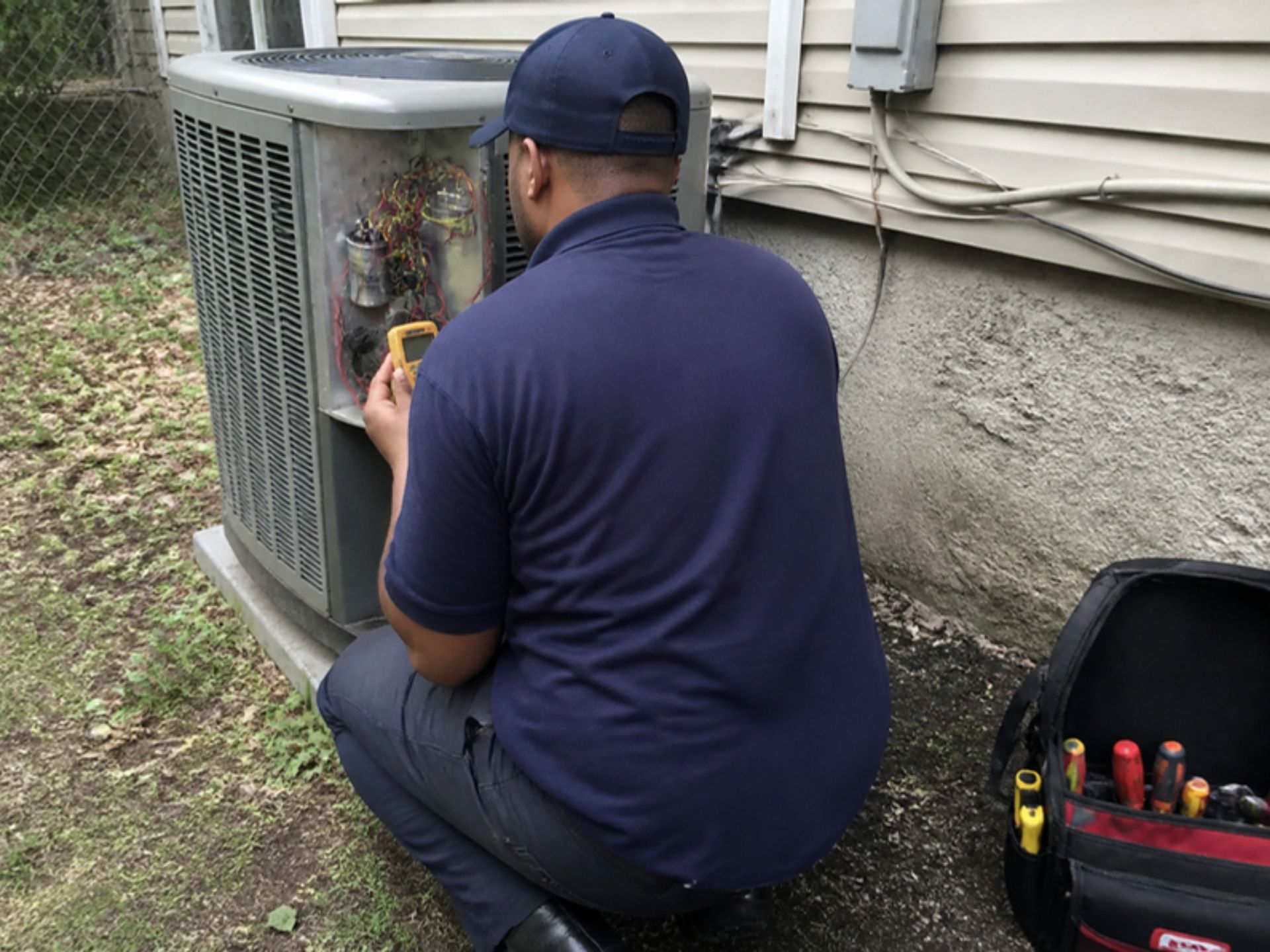
Warm vent air, iced suction lines, and condensers that hum without starting usually trace back to capacitors, contactors, fan motors, or refrigerant problems. We test each component and replace only what failed.
Technician kneeling by outdoor HVAC unit, checking controls beside a house
LEAK REPAIR
Refrigerant Leak Detection and Repair

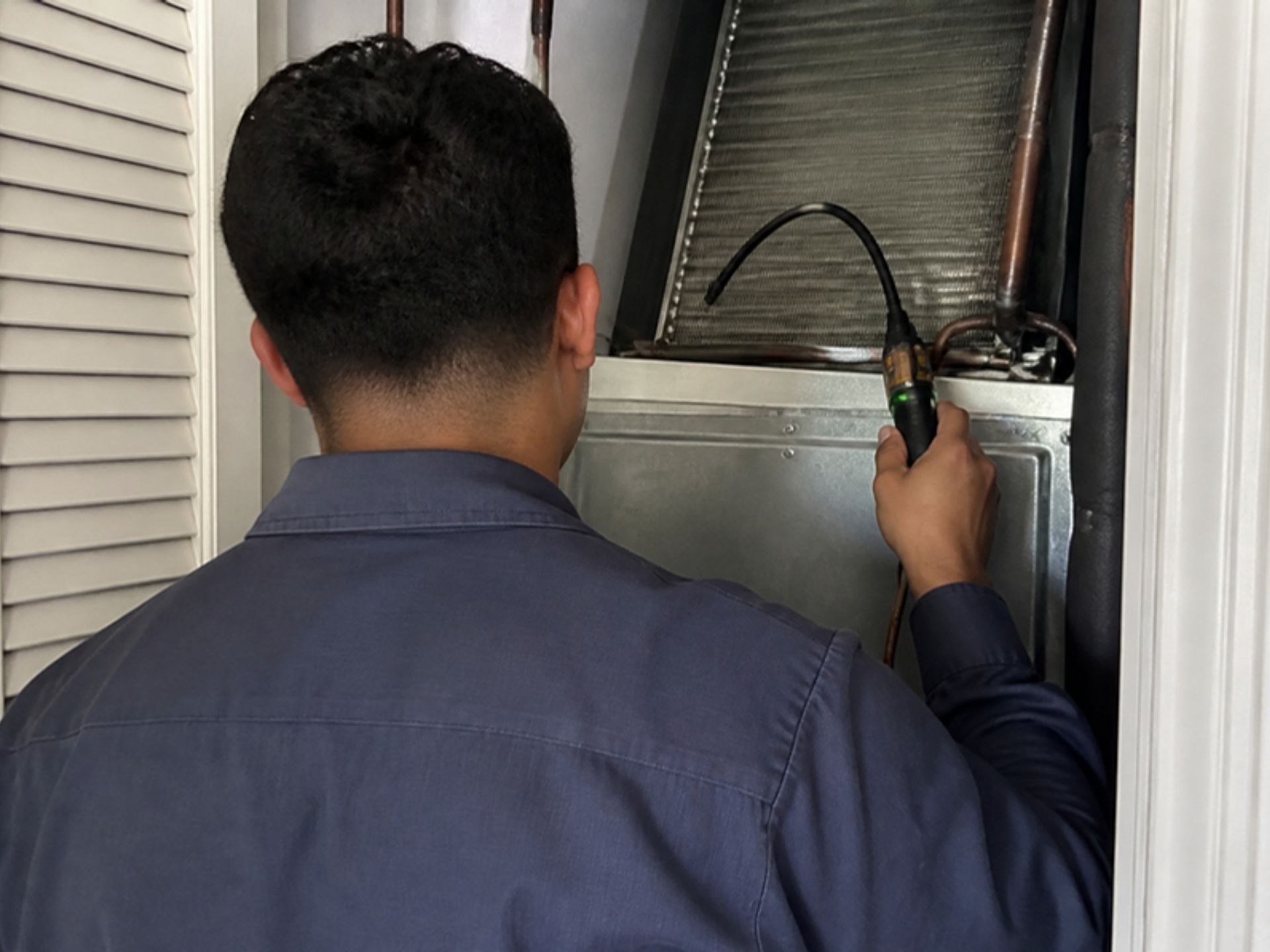
Electronic detectors, bubble solution, and nitrogen pressure testing locate leaks in coils, line sets, and fittings. After the repair, the system is evacuated and recharged to the manufacturer’s exact specification by weight.
Technician installing a wall-mounted air conditioner above a window
HEAT PUMPS
Heat Pump Repair

Heat pumps that blow cool air in winter, ice over, or skip defrost often have reversing valve, sensor, or defrost board problems. We diagnose both heating and cooling modes before recommending any repair.
Worker installing ductwork in a ceiling, wearing a hooded jacket and using tools near exposed pipes
DUCTLESS UNITS
Ductless Mini Split Repair

Blinking error codes, leaking indoor heads, and weak airflow from mini splits often point to dirty blower wheels, failed sensors, or communication faults. We clean, test, and repair both indoor and outdoor units.
Hand using a drill to install an electrical box on a wall, with a level above it
FURNACE SERVICE
Furnace Repair

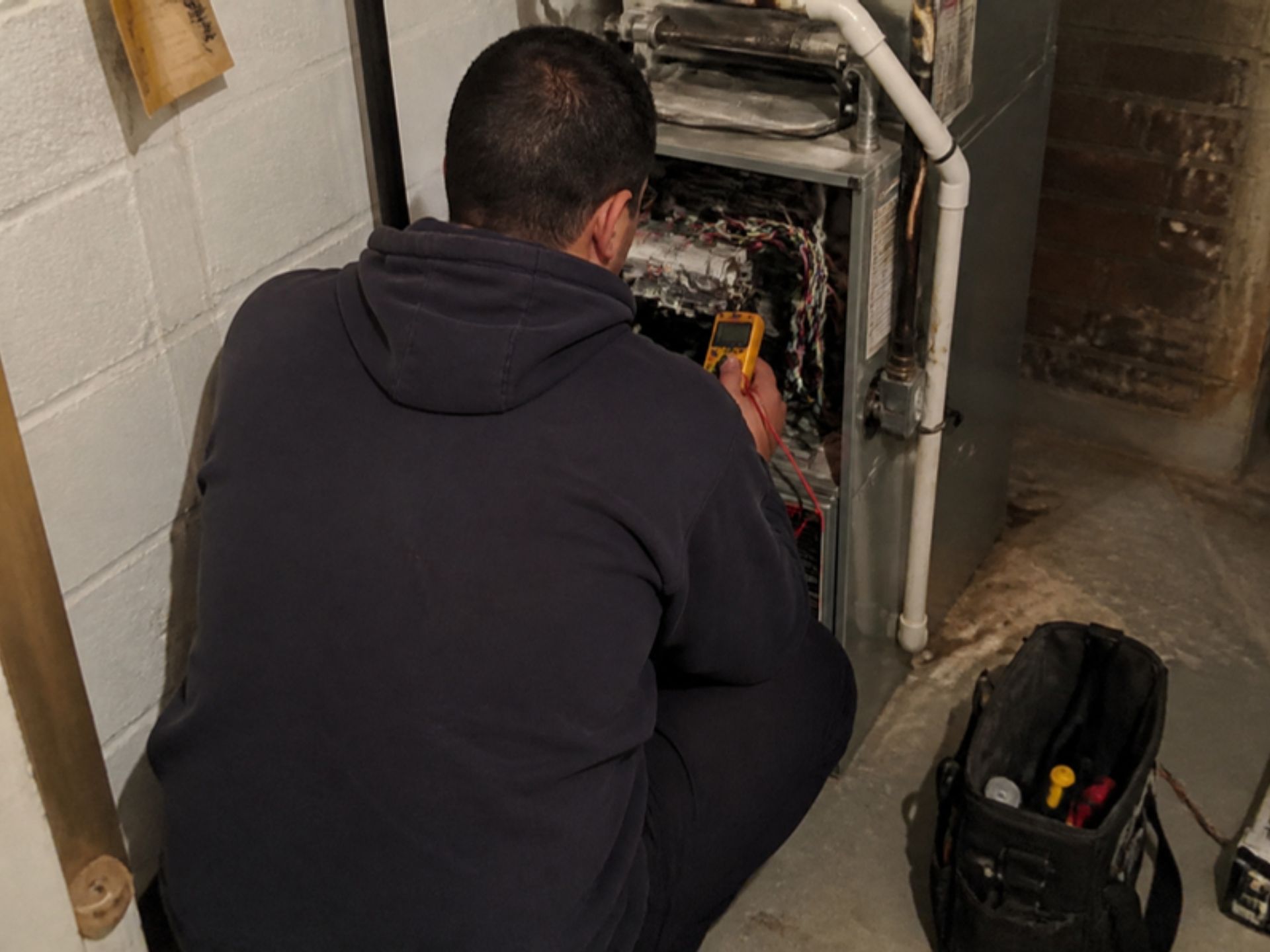
Furnaces that cycle on the limit switch, fail to ignite, or blow cold air need careful testing of igniters, flame sensors, pressure switches, and inducer motors, with venting checked before restart.
HVAC technician replacing a furnace filter in a home utility room
DRAIN FIXES
Condensate Drain and Pump Repair

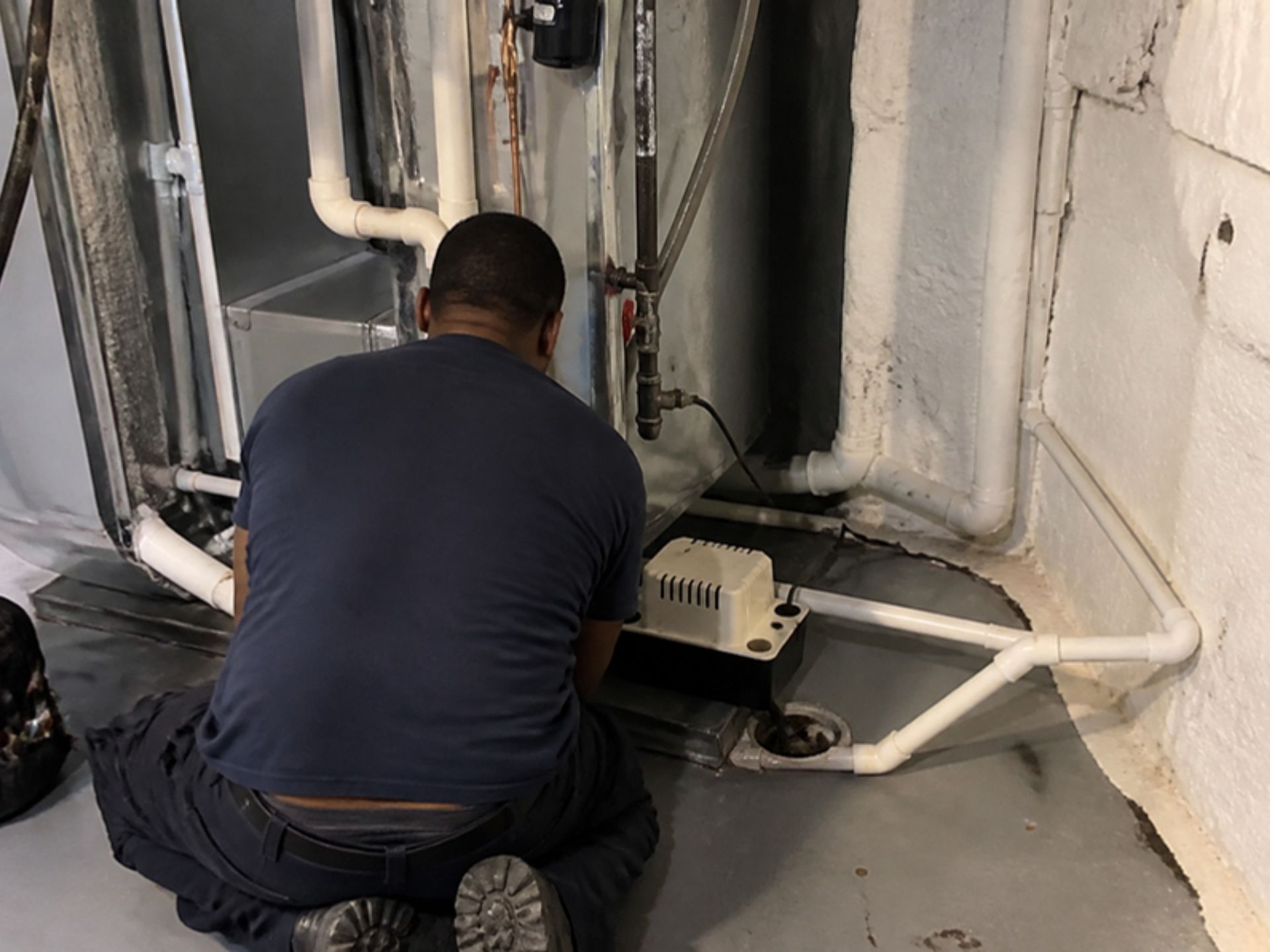
Clogged drain lines, cracked pans, and failed condensate pumps can flood ceilings or trip safety switches that shut the system down. We clear lines, replace pumps, and add float switches where needed.
Short black horizontal line on a white background

Real Reviews · Real Customers

WHAT OUR CLIENTS SAY.

Homeowners have written about these repairs in their Google reviews, including one whose air conditioner stopped cooling because of a clogged condensate drain line. They describe quick, understandable explanations, professional conduct, fair value, and systems that were back up and running in no time.
Short black horizontal line on a white background
FAQ

FREQUENTLY ASKED QUESTIONS.

Most cooling and heating symptoms point to a short list of causes. These answers explain warm air, frozen coils, short cycling, leaks, uneven rooms, refrigerant, and the noises worth taking seriously.

    Why is my air conditioner running but blowing warm air?

    Common causes include a failed outdoor fan or capacitor, low refrigerant from a leak, a dirty condenser coil, or a thermostat set to fan only. Shut the system off if the outdoor unit is not running at all.


    What causes ice to form on my AC’s refrigerant lines?

    Ice usually means too little airflow across the indoor coil or a low refrigerant charge. A clogged filter, dirty blower wheel, or closed vents can cause it. Turn the system off and let it thaw before service.


    Why does my system turn on and off every few minutes?

    Short cycling often comes from an oversized system, a dirty flame sensor, an overheating furnace, a failing capacitor, or a thermostat placed near a heat source. Each extra start stresses components, so it deserves prompt attention.


    Why is water leaking from my indoor AC unit?

    A clogged condensate drain line, cracked drain pan, or failed condensate pump usually causes indoor leaks. Maverick Ambitions HVAC clears drain lines and replaces pumps for homeowners in Newark, NJ before water reaches the ceilings below.


    Why does my air conditioner run constantly on hot days?

    On the hottest afternoons, long run times can be normal. Nonstop operation in milder weather points to low charge, dirty coils, leaky ducts, or an undersized system that cannot keep up with the home’s load.


    Why are some rooms hotter than others?

    Uneven temperatures usually come from duct problems such as crushed runs, leaky joints, or undersized returns, along with sun exposure and missing insulation. Balancing dampers, sealing ducts, or adding zones can even things out.


    Does an air conditioner need refrigerant added every year?

    No. Refrigerant circulates in a sealed loop and should last the life of the system, so a shortage means a leak. Maverick Ambitions HVAC repairs the leak first for homes in Newark, NJ, then recharges to specification.


    Which HVAC noises mean something is wrong?

    Squealing often signals a worn belt or motor bearing, grinding suggests failing bearings, rattling means loose panels or parts, and repeated clicking without startup points to electrical trouble. A loud bang at startup deserves immediate attention.


    Black horizontal line on a white background
    HOW WE WORK

    HERE IS HOW A REPAIR VISIT UNFOLDS.

    Step-01

    WE LISTEN TO THE SYMPTOMS
    You describe what the system is doing, when it started, and whether anything changed recently, such as a storm, a power outage, or a new filter. Those details point our testing toward the likeliest components.

    Step-02

    WE MEASURE, NOT GUESS
    Gauges, thermometers, and meters show refrigerant pressures, temperature split, amp draw, and voltage. Comparing those readings with manufacturer specifications reveals which part is failing, even when several symptoms appear at once and seem to point in different directions.

    Step-03

    WE SHOW YOU THE PROBLEM
    You see the bulged capacitor, the corroded contactor, or the reading that confirms a leak. We explain what failed and why, then give you a free estimate for the repair before touching a single wire or fitting.

    Step-04

    WE MAKE THE REPAIR
    Approved replacement parts go in, wiring is landed securely, and refrigerant work follows EPA rules, with leaks repaired before any recharge. Your floors and furnishings stay protected throughout the work inside your home with drop cloths and shoe covers.

    Step-05

    WE TEST THE WHOLE SYSTEM
    After the repair, we run the equipment through full cycles, recheck refrigerant pressures and temperatures, confirm safety controls respond correctly, and make sure the original symptom is truly gone rather than just quieter for the moment.

    Step-06

    WE TALK THROUGH NEXT STEPS
    Before leaving, we mention anything else we noticed, such as a weakening motor or an aging coil, so you can plan ahead instead of being surprised. Then we clean up and leave the area tidy.