Black horizontal rounded line on a white background

Commercial Refrigeration Installation

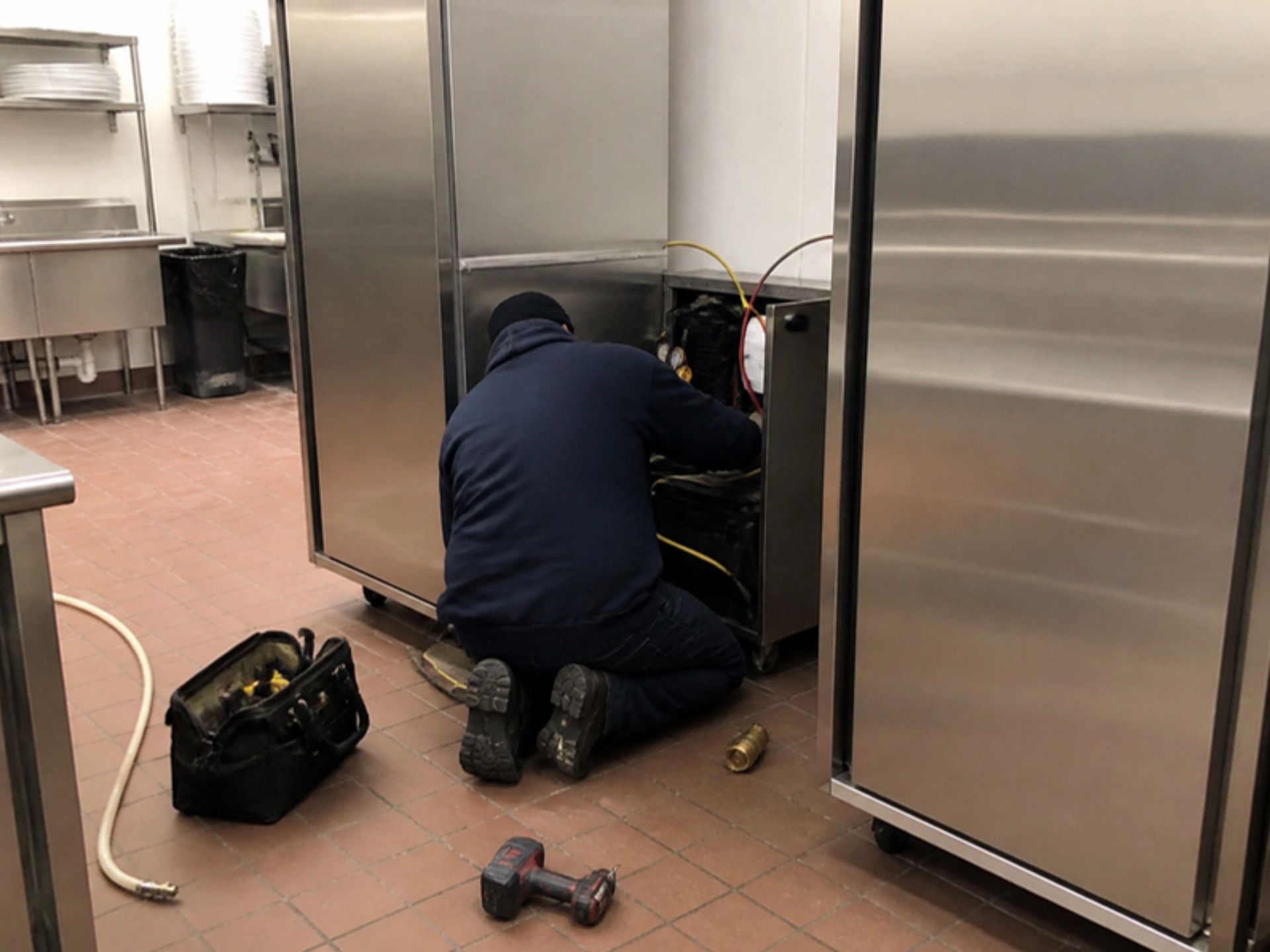
Every self-contained reach-in releases the heat it pulls from food straight back into the room, so a cooler parked beside a fryer line or in a cramped, unventilated corner works harder and wears out sooner. Maverick Ambitions HVAC handles commercial refrigeration installation in Newark, NJ with placement in mind, installing reach-ins, ice machines, display cases, prep tables, and remote condensing units for restaurants, grocers, and convenience stores, with electrical, drainage, and airflow planned so equipment holds 41°F or colder.
Technician repairing an outdoor air conditioner unit with tools and hoses
Technician repairing a white air conditioner unit with tools on a tiled floor

REFRIGERATION FAILS FIRST WHERE IT WAS INSTALLED WRONG.

Many refrigeration service calls trace back to installation day: a condenser starved of airflow, a drain line without a trap, a remote unit charged by guesswork, or a cooler plugged into a shared circuit that trips during the dinner rush. Those mistakes rarely show up immediately. They surface months later as warm product, iced coils, or a compressor that quits years before it should. We plan location, airflow, power, drains, and refrigerant piping before equipment arrives, so new refrigeration starts strong, pulls down to temperature on schedule, and keeps running reliably through every busy season.
Black horizontal line on a white background.
COMMERCIAL REFRIGERATION INSTALLATION

COLD, SAFE PRODUCT FROM THE DAY YOUR NEW EQUIPMENT STARTS.

New refrigeration should do one job flawlessly: hold food at safe temperatures every hour the business is open and every hour it is closed. Proper installation makes that possible. Equipment placed with breathing room, connected to dedicated power, drained correctly, and started up with a measured refrigerant charge reaches temperature quickly and holds it, keeping inventory fresh, inspections clean, and staff focused on customers instead of thermometers.
CRAMPED KITCHENS LEAVE LITTLE ROOM FOR MISTAKES.
Restaurant and bodega kitchens around Newark, NJ often squeeze refrigeration into narrow lines, basements, and storage rooms with little ventilation. Remote condensers may need to go on a roof, a rear wall, or a small yard shared with neighbors. We plan placement around heat sources, airflow, noise, and service access, so equipment fits the space you actually have without cooking itself through the long, humid summer months.
COLD ROOMS AND HOT KITCHENS ARE FAMILIAR GROUND.
The person behind every installation holds a New Jersey Master HVACR license, and the R in that title stands for refrigeration. During 24 years of HVACR work, he has installed and serviced reach-ins, display cases, ice machines, and remote systems in restaurants, groceries, and specialty food businesses. That experience shapes every placement decision, every line set, and every startup checklist we use when new equipment arrives at your door.
WHAT PROFESSIONAL REFRIGERATION INSTALLATION DELIVERS.
Black gear with weather icons: flame, heat waves, snowflake, and water drops around it
Food Held at Safe Temperatures
Correctly installed and charged equipment holds product at 41°F or colder, protecting customers, reducing waste, and keeping health inspectors satisfied from the very first stocked shelf onward through every busy week.
Black temperature-control icon with gear, heat waves, flame, snowflake, and water drop
Lower Energy Use
Equipment with proper airflow, correctly sized condensers, and efficient components runs shorter cycles, cutting electricity costs for refrigeration that operates around the clock, every day of the year.
Black weather icon with gear, flame, snowflake, water drop, and heat waves
Longer Equipment Life
Good airflow, clean power, and an accurate refrigerant charge protect compressors from overheating and stress, helping new equipment last well beyond what hastily or poorly installed units ever achieve.
Black climate control icon with gear, snowflake, flame, droplet, and heat waves
Fewer Service Calls
Avoiding the common installation mistakes, from untrapped drains to shared circuits, prevents many of the nuisance failures that bring technicians back during busy dinner shifts and crowded holiday weekends.
Black gear icon surrounded by fire, heat waves, snowflake, and water drops
Better Kitchen Comfort
Locating condensers away from cook lines, or moving them outside with remote systems, keeps refrigeration heat out of the kitchen and makes long, hot shifts more bearable for your staff.
Black weather control icon with gear, flames, snowflake, water drop, and heat waves
Smoother Inspections
Thermometers in place, proper drains, and equipment holding temperature from day one give health inspectors fewer reasons to write violations and fewer reasons to schedule a follow-up visit.
Black horizontal rounded bar on a white background

our services

OUR COMMERCIAL REFRIGERATION INSTALLATION WORK.
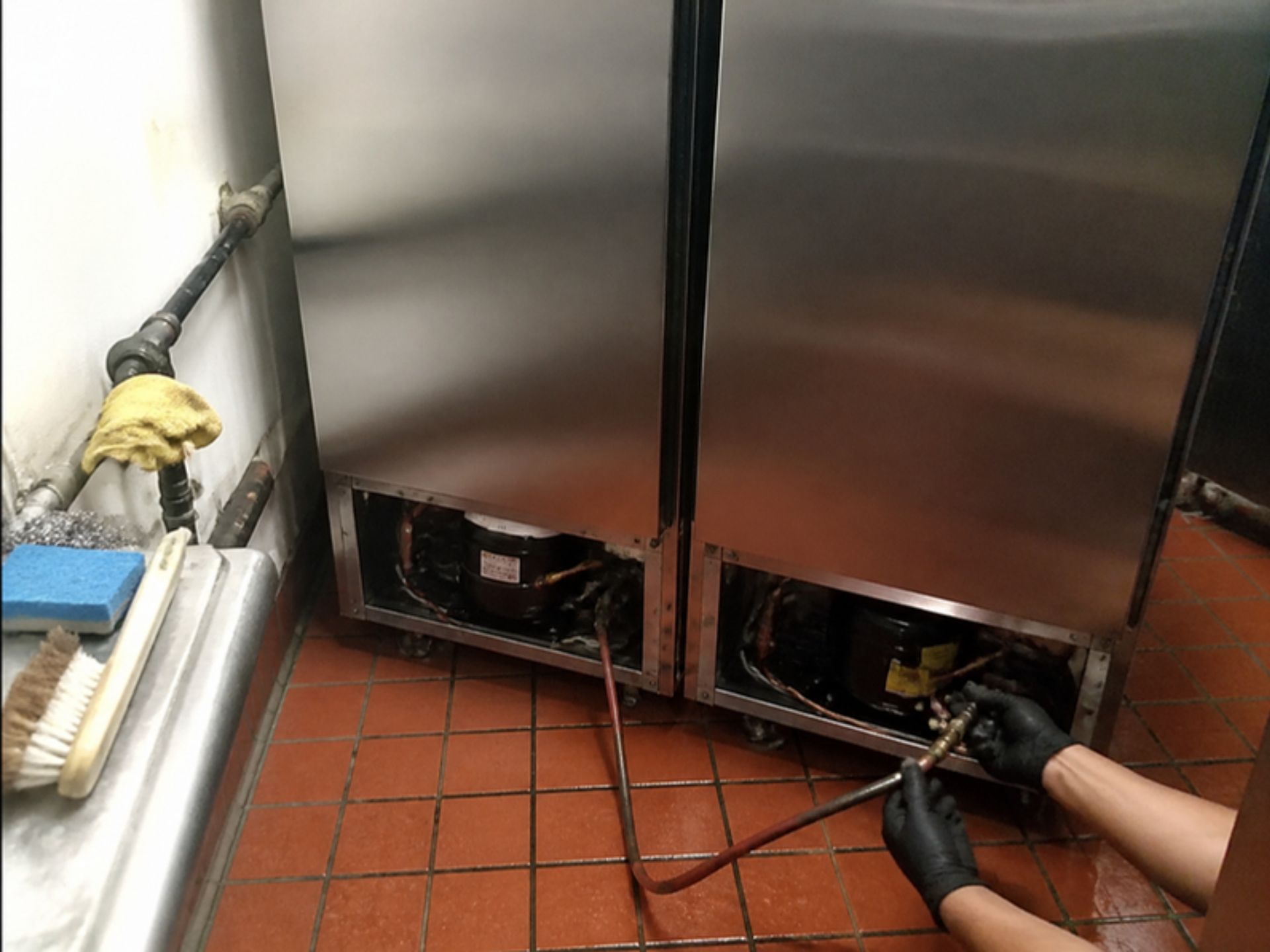
Every food business uses refrigeration differently, from a single bar cooler to a full line of display cases. These are the refrigeration installations restaurants, grocers, and specialty shops request from us most often.
Hands adjusting a white ceiling fixture with a screwdriver against a concrete ceiling
REACH-INS
Reach-In Cooler and Freezer Installation

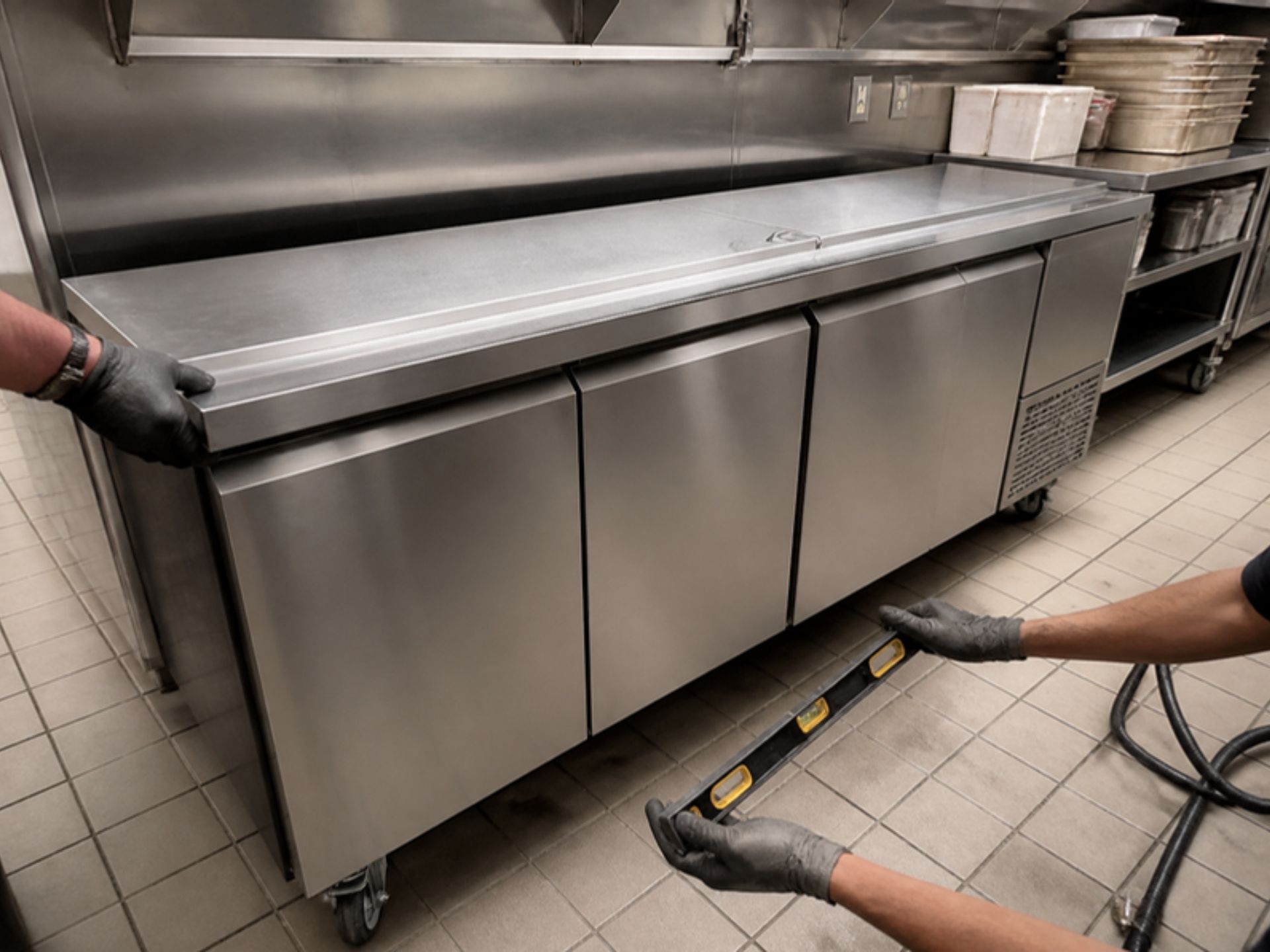
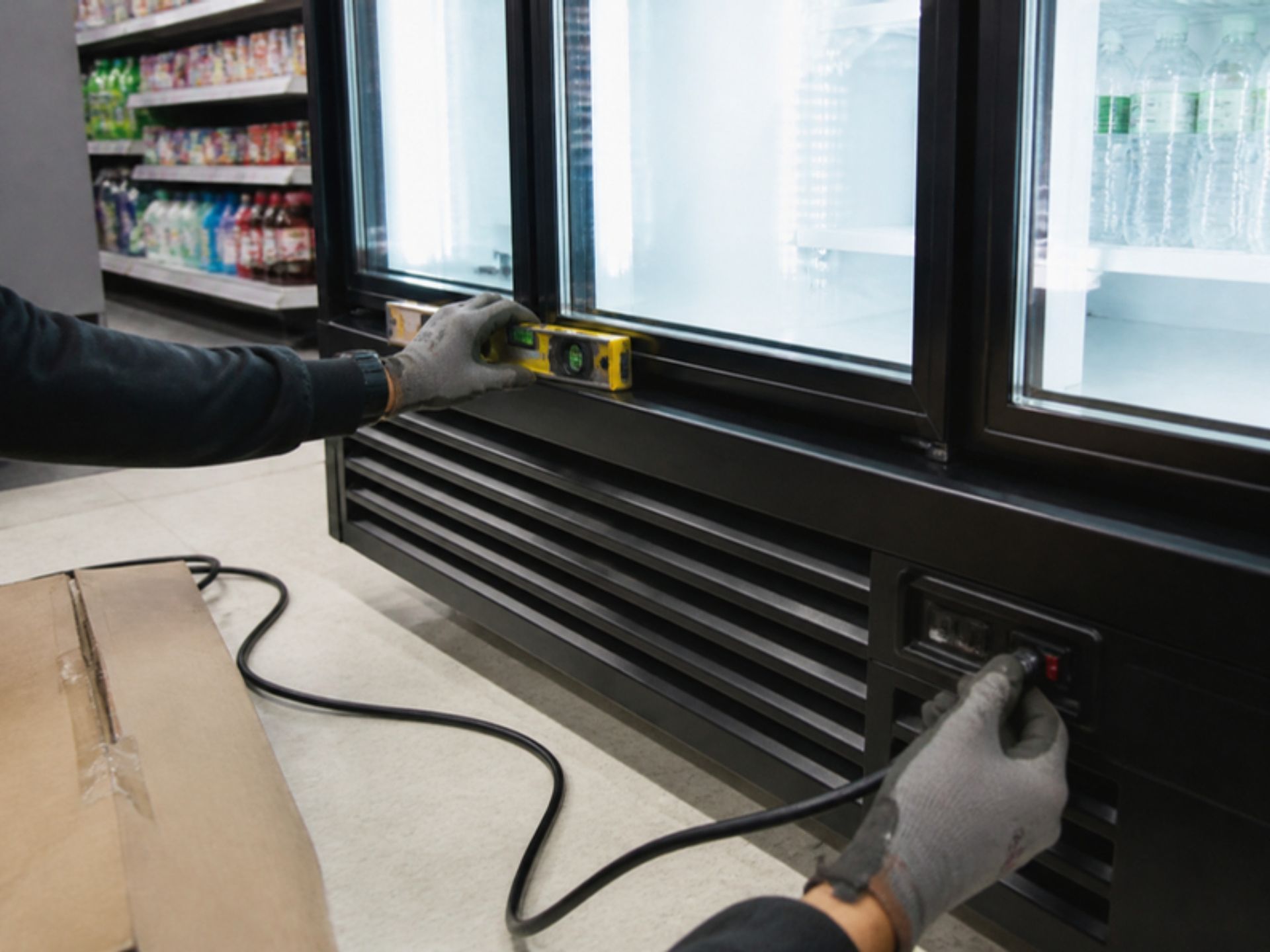
Reach-in coolers and freezers are leveled, positioned with manufacturer clearances for airflow, connected to dedicated circuits, and verified to pull down and hold temperature before any product or ingredients go inside them.
Technician kneeling by outdoor HVAC unit, checking controls beside a house
PREP STATIONS
Prep Table and Undercounter Installation

Sandwich prep tables, pizza prep units, and undercounter refrigerators are installed with careful attention to ventilation beneath the counter, so compressors stay cool and efficient even when they sit right beside grills, ovens, and fryers.
Technician installing a wall-mounted air conditioner above a window
DISPLAY CASES
Refrigerated Display Case Installation

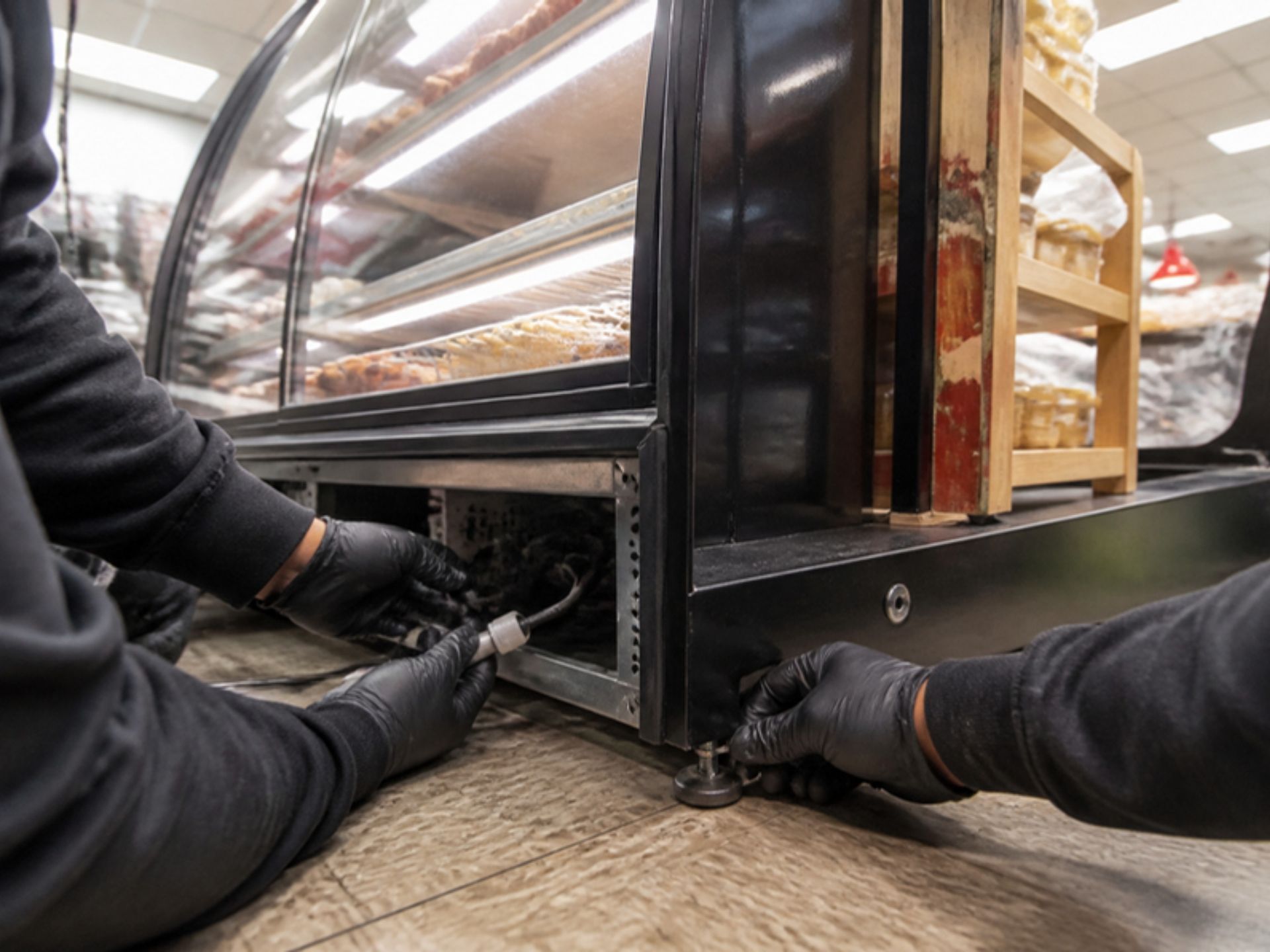
Open and glass-door display cases for grocers, delis, and convenience stores are set, connected to drains and power, and adjusted for air curtains and lighting that keep product cold and visible.
Worker installing ductwork in a ceiling, wearing a hooded jacket and using tools near exposed pipes
ICE MACHINES
Ice Machine Installation

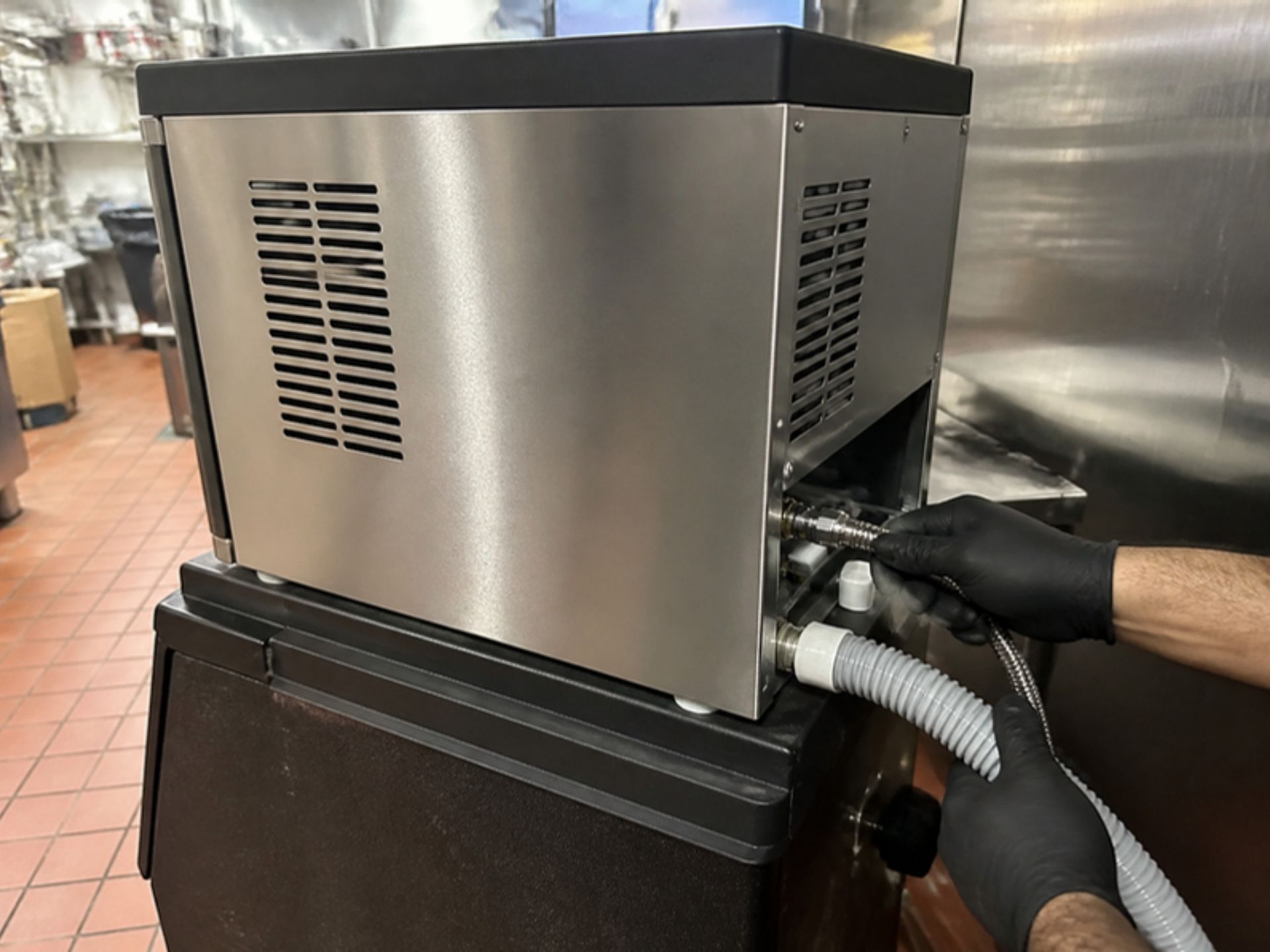
Ice machines are installed with water filtration, proper drains with air gaps, and adequate ventilation or remote condensers, then started and tested so the first harvest comes out clean and on schedule.
Hand using a drill to install an electrical box on a wall, with a level above it
REMOTE SYSTEMS
Remote Condensing Unit Installation

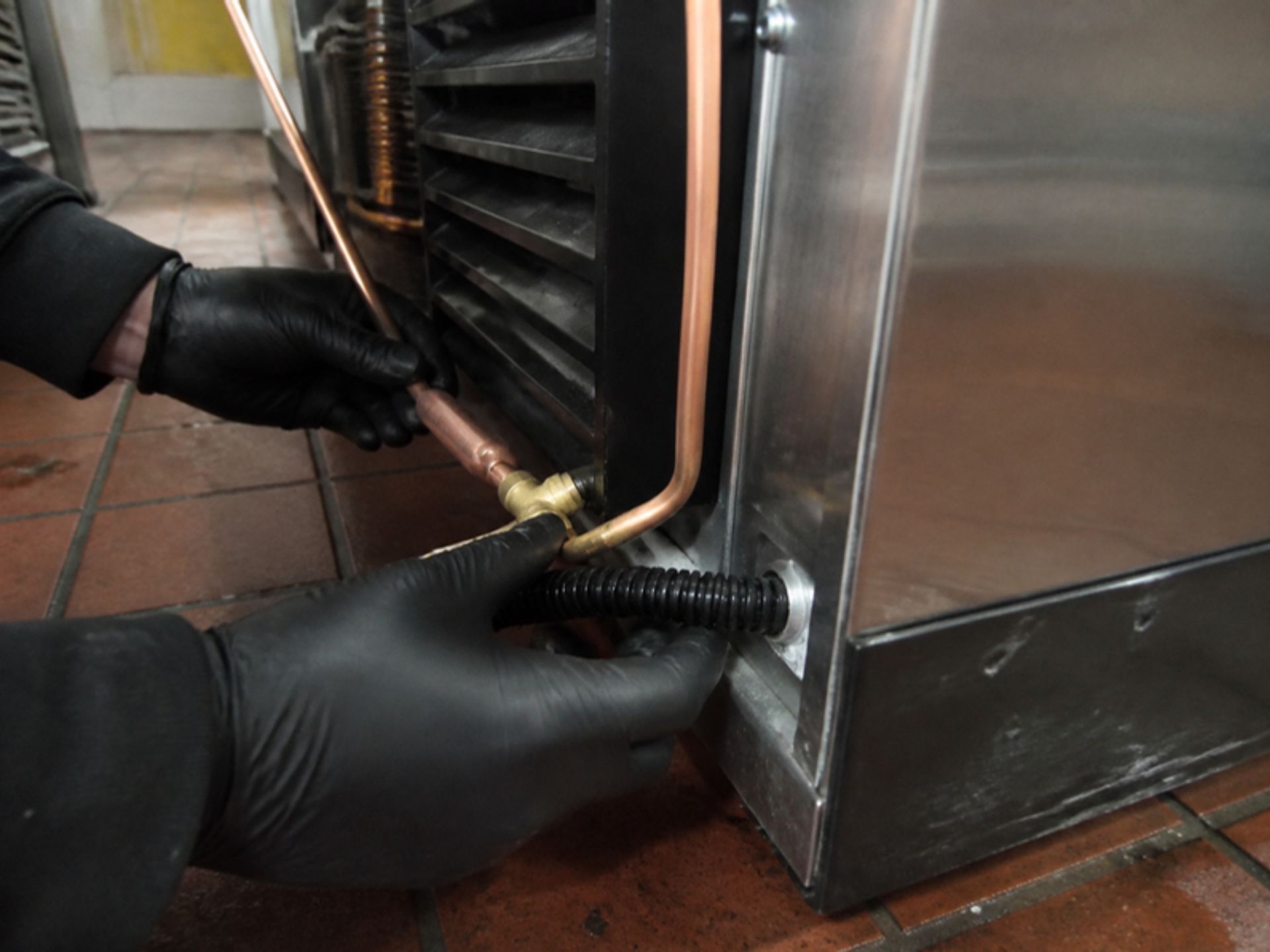
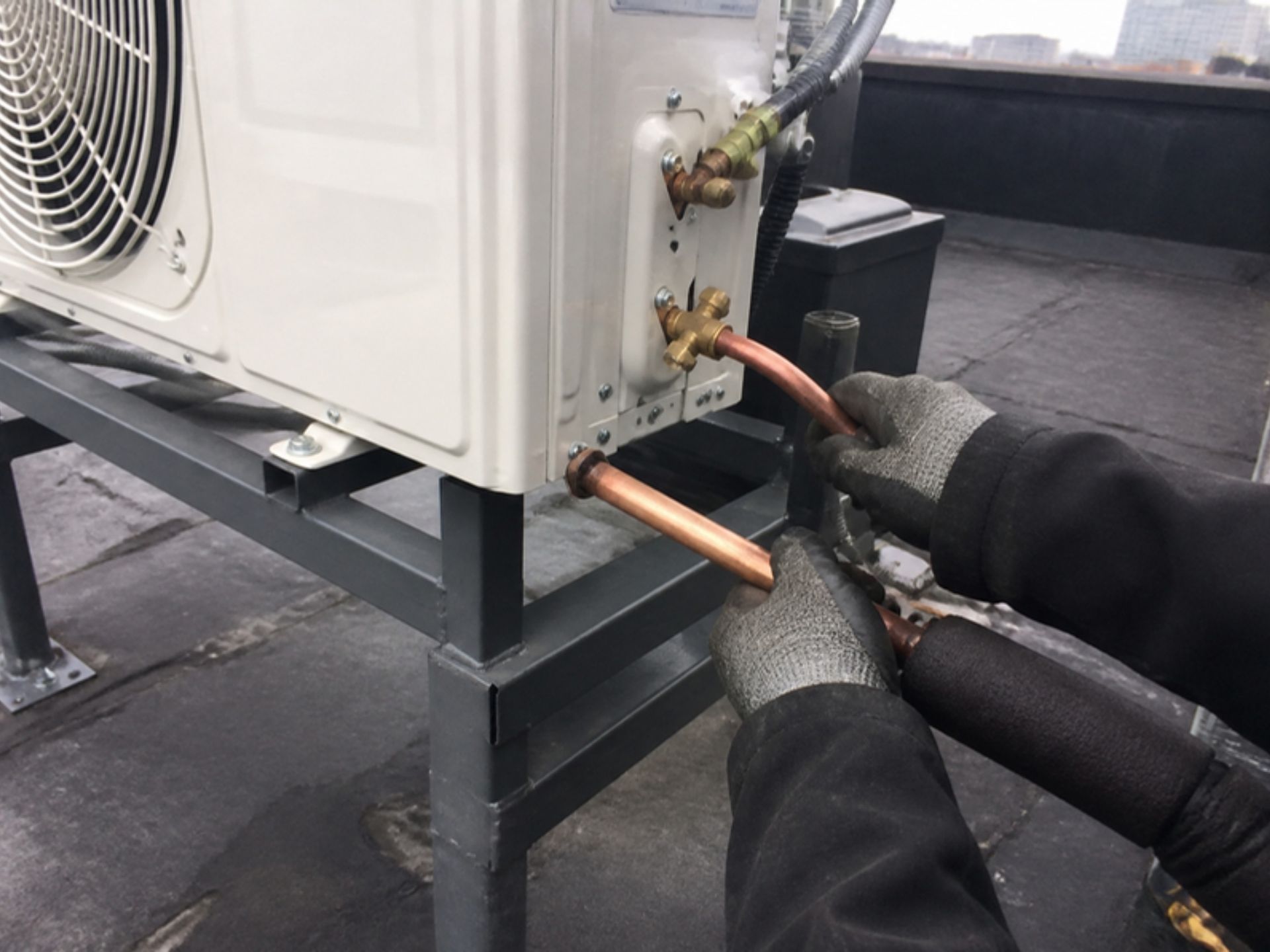
Remote condensing units move compressor heat and noise outdoors. We set the unit, run insulated refrigerant lines, pressure test, evacuate, and charge the system by measurement for reliable, efficient, and quiet performance.
HVAC technician replacing a furnace filter in a home utility room
MERCHANDISERS
Beverage Cooler and Merchandiser Installation

Glass-door merchandisers and back-bar coolers for stores, bars, and cafés are placed for airflow and customer access, connected to proper power, and checked for tight door seals and steady temperature control.
Short black horizontal line on a white background

Real Reviews · Real Customers

WHAT OUR CLIENTS SAY.

Restaurant owners and store managers who installed new refrigeration with us talk about careful placement advice, clean installations, and equipment that held temperature from the very first day. Several mention appreciating our honesty about which spots in their kitchens would shorten equipment life.
Short black horizontal line on a white background
FAQ

FREQUENTLY ASKED QUESTIONS.

New refrigeration raises practical questions about system types, remote line lengths, power, new versus used equipment, clearances, water filtration, kitchen layout, and startup. These answers help you plan before equipment is delivered.

    What is the difference between self-contained and remote refrigeration?

    Self-contained units house the compressor and condenser in the cabinet, releasing heat into the room. Remote systems place them outside or on the roof, reducing kitchen heat and noise but requiring refrigerant piping.


    How far can a remote condensing unit be from the cooler?

    Manufacturers set maximum line lengths and height differences for each system, and longer runs need careful pipe sizing and oil return planning. Maverick Ambitions HVAC designs remote line routes for businesses in Newark, NJ within those limits.


    What electrical requirements does commercial refrigeration have?

    Most commercial units need dedicated circuits sized to the manufacturer’s nameplate, correct voltage, and proper grounding. Extension cords and shared outlets cause voltage drops that overheat compressors and trip breakers during busy hours.


    Should a restaurant buy new or used refrigeration equipment?

    Used equipment costs less upfront but may carry worn compressors, older refrigerants, and no warranty. New units offer warranty coverage and current efficiency standards. Having used equipment inspected before purchase reduces the risk considerably.


    How much clearance does a reach-in need?

    Requirements vary by model, but many self-contained units need several inches at the back, sides, or top for airflow. Blocking the condenser raises head pressure, wastes energy, and shortens compressor life considerably.


    Does an ice machine need a water filter?

    Yes, and most manufacturers strongly recommend one. Filtration reduces scale, chlorine taste, and sediment, which protects the evaporator plate, improves ice clarity, and helps maintain warranty coverage on the machine.


    How should refrigeration be laid out in a commercial kitchen?

    Keep refrigeration away from fryers, ovens, and dish machines, place prep coolers near where ingredients are used, and leave space for airflow and cleaning. Maverick Ambitions HVAC reviews kitchen layouts in Newark, NJ before installation.


    How long should new refrigeration run before it is stocked?

    Most manufacturers recommend letting new units run until they reach and hold set temperature, often several hours, before loading product. Stocking warm food into a unit that has not pulled down strains the compressor.


    Black horizontal line on a white background
    HOW WE WORK

    DELIVERY DOCK TO FULLY STOCKED SHELVES, HERE IS HOW.

    Step-01

    WE WALK THE SPACE
    We review your kitchen or store layout, electrical panel, drains, ventilation, and equipment list, noting heat sources and traffic patterns. Those details decide where each unit belongs and what preparation the space needs first.

    Step-02

    WE PLAN POWER, DRAINS, AND AIRFLOW
    Dedicated electrical circuits, drain connections with proper air gaps, condenser placement, and refrigerant line routes are planned before delivery. Anything requiring an electrician or plumber is identified early to keep the whole schedule intact.

    Step-03

    WE QUOTE THE INSTALLATION
    You receive a free, detailed estimate covering equipment setting, connections, remote condensing work, startup, and any supporting trades. Options are explained clearly, and installation is scheduled around equipment deliveries, inspections, and your opening hours.

    Step-04

    WE SET AND CONNECT
    Equipment is leveled and positioned with proper clearances, connected to power and drains, and remote systems are piped, pressure tested, and evacuated. Ice machines receive filtration along with correct water and drain connections to code.

    Step-05

    WE START AND PULL DOWN
    Each unit is started, refrigerant charge is verified on remote systems, and temperatures are monitored until every cooler and freezer reaches and holds its setpoint. Controls and defrost settings are adjusted for your use.

    Step-06

    WE TRAIN YOUR STAFF
    We show your team where thermometers, controls, filters, and condenser coils are, explain daily checks and cleaning basics, and register warranties. Then the equipment is ready for its first full load of product and its first busy service.